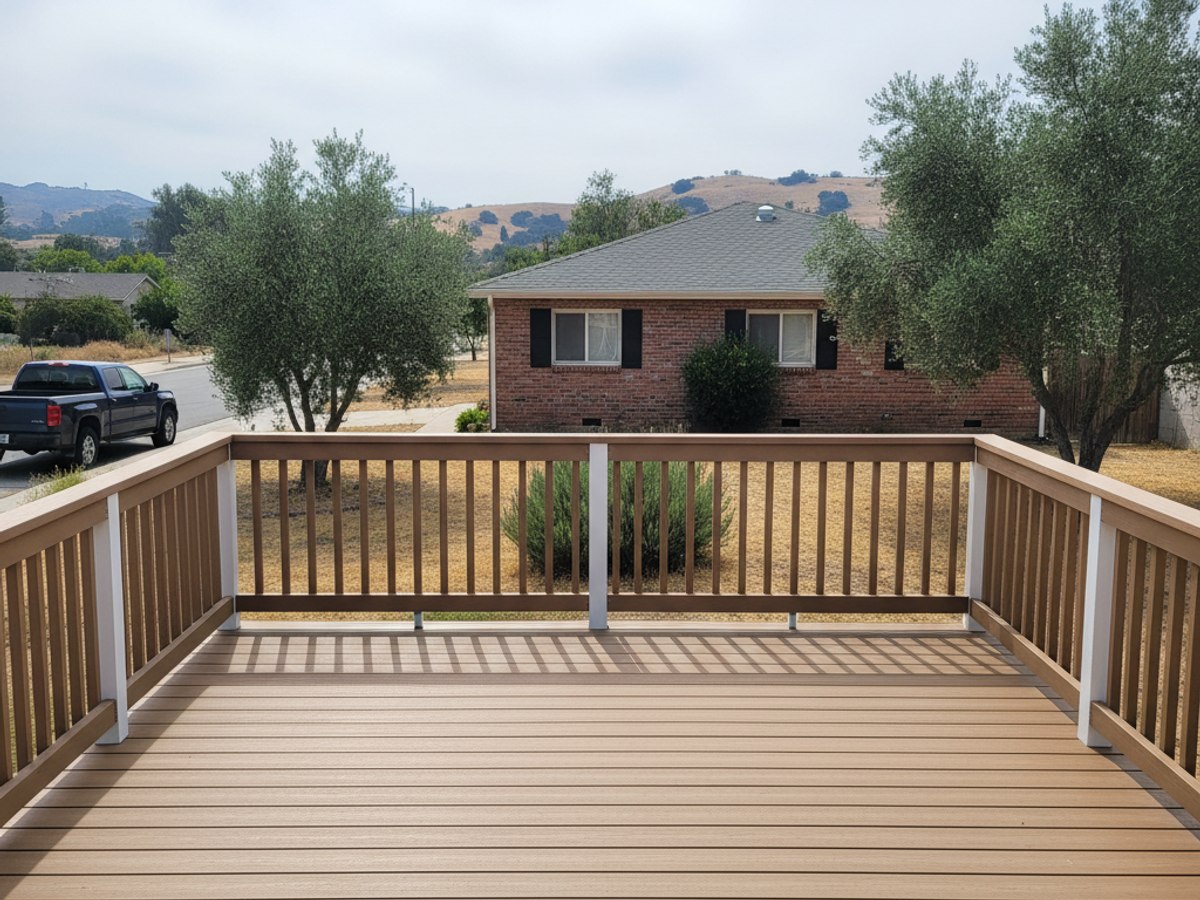
Most of the country builds decks on the calendar because the ground makes them. Frost heave in Ohio, mud season in Vermont, a construction freeze from December to March in half the Midwest. Los Angeles doesn't have that problem. We don't get a hard freeze here, so footings can be poured in January just as well as July, structurally speaking. That doesn't mean every month is equal. It means the reasons to time your project have more to do with rain, heat, and what your particular lot is sitting on than with ice.
The rainy season isn't dangerous, it's just slow
Southern California's wet months run roughly November through March, with the heaviest storms usually landing in January and February. A single atmospheric river event can drop two or three inches in a day, which doesn't sound like much next to a Gulf Coast hurricane, but LA soil isn't built to shed it fast. A lot of the flatland from the San Fernando Valley down through the Eastside sits on clay or clay-loam that swells when it's wet and shrinks hard when it dries. Dig a footing hole in that soil right after a storm and you're working in soup. Pour concrete into it without letting it firm back up and you get a footing that settles unevenly a year or two later, which shows up as a deck that's started to rock at one corner.
Framing and demo can still happen in the rain, there's just more mud tracked through the yard and more tarping involved to keep lumber dry before it's fastened. Staining and sealing are the ones that really don't want rain. Most exterior deck sealers need 24 to 48 hours of dry weather after application to cure properly, and if a storm rolls in before that window closes, you get a cloudy or blotchy finish that has to be sanded back and redone.
Summer heat changes how stain and composite decking behave
Inland areas, Woodland Hills, Chatsworth, the San Gabriel Valley, regularly hit the mid-90s to low 100s from July through September. That heat flash-dries oil and semi-transparent stains before they've had time to soak into the wood grain, which leaves lap marks where one brush stroke overlaps the last. Anyone staining a deck in August out there is usually starting at 7am and stopping by 10, before the boards get too hot to touch.
Composite decking has its own summer quirk. It expands more than wood does with heat, so gapping between boards has to account for it or you'll get boards buckling against each other by the second August. Closer to the coast, Santa Monica, Venice, Playa del Rey, the marine layer keeps mornings cool and damp into July, sometimes not burning off until 11am, which pushes back anything that needs a dry surface to bond to.
Why fall is usually the best stretch
September through November tends to be the sweet spot. The ground has dried out from any late spring rain, temperatures have come down off the summer peak, and the first real storms usually haven't arrived yet. Stain cures evenly, footings go into ground that's neither swollen with water nor baked into hardpan, and there's a decent run of dry days in a row to finish a multi-day project without a tarp fight. Late spring, April into May, is the other reasonable window, once the rain has tapered off but before the heat sets in.
None of this means winter is off the table. If your deck has failing joists or a rotted ledger board, you don't wait five months for better weather, you fix it. Structural repair work happens year-round here. Timing mostly matters for the finish work and for anything involving fresh concrete.
What the soil under your lot actually does
LA isn't one soil type. Older flatland neighborhoods, think Eagle Rock, Highland Park, most of the Valley, are built on that clay-heavy soil that moves with moisture. Hillside lots in places like Silver Lake, Mount Washington, or the canyons off Laurel Canyon Boulevard are often sitting on fill or decomposed granite, and depending on the slope, the city may require a soils report before footings go in. Coastal strips have sandier soil that drains fast and doesn't swell much, which is one less thing to worry about but doesn't mean the footings can be shallower, just that the failure mode is different.
Older homes also come with older decks. A lot of houses from the 1920s through the 1950s in neighborhoods like these have decks that were added decades after the house was built, sometimes without a permit, sometimes with a ledger board lag-bolted straight into old framing with no flashing behind it. That's one of the most common repair calls we see, wood rot right at the ledger where water's been getting behind the siding for years.
Permits don't run on a season, but they do run on time
The City of Los Angeles requires a permit through LADBS for most decks over 30 inches above grade, and that permit process includes an inspection of the footings before they're covered and a framing inspection before decking goes down. Unincorporated LA County areas go through the county's building department instead, and cities like Pasadena, Burbank, or Santa Monica have their own departments and their own timelines. If your property is in an HOA, which is common in newer hillside developments and planned communities, expect an architectural review on top of the city permit, and that review can add a few weeks regardless of the month.
Building that lead time into your schedule matters more than picking the perfect week of the year. A permit applied for in October, with inspections lined up before the holidays, gets you built and sealed before the wettest part of winter hits. Applied for in December, you might be pouring footings in February mud instead.
If you're not sure whether your lot's soil, slope, or an older deck's condition changes any of this, that's a site visit conversation, not a guess from a blog post. Classic Deck Co works throughout LA and the surrounding towns and can walk the specific site before you commit to a start date.